
The Interface Between Robots and Elevators

Service robots are taking on an increasing number of tasks in hospitals, hotels, offices, and laboratories. From food and material deliveries to room service, internal transportation, and logistics, the range of applications is diverse. However, when robots need to move between floors, they often face a technical challenge: There is no standardized interface between robots and elevator control systems.

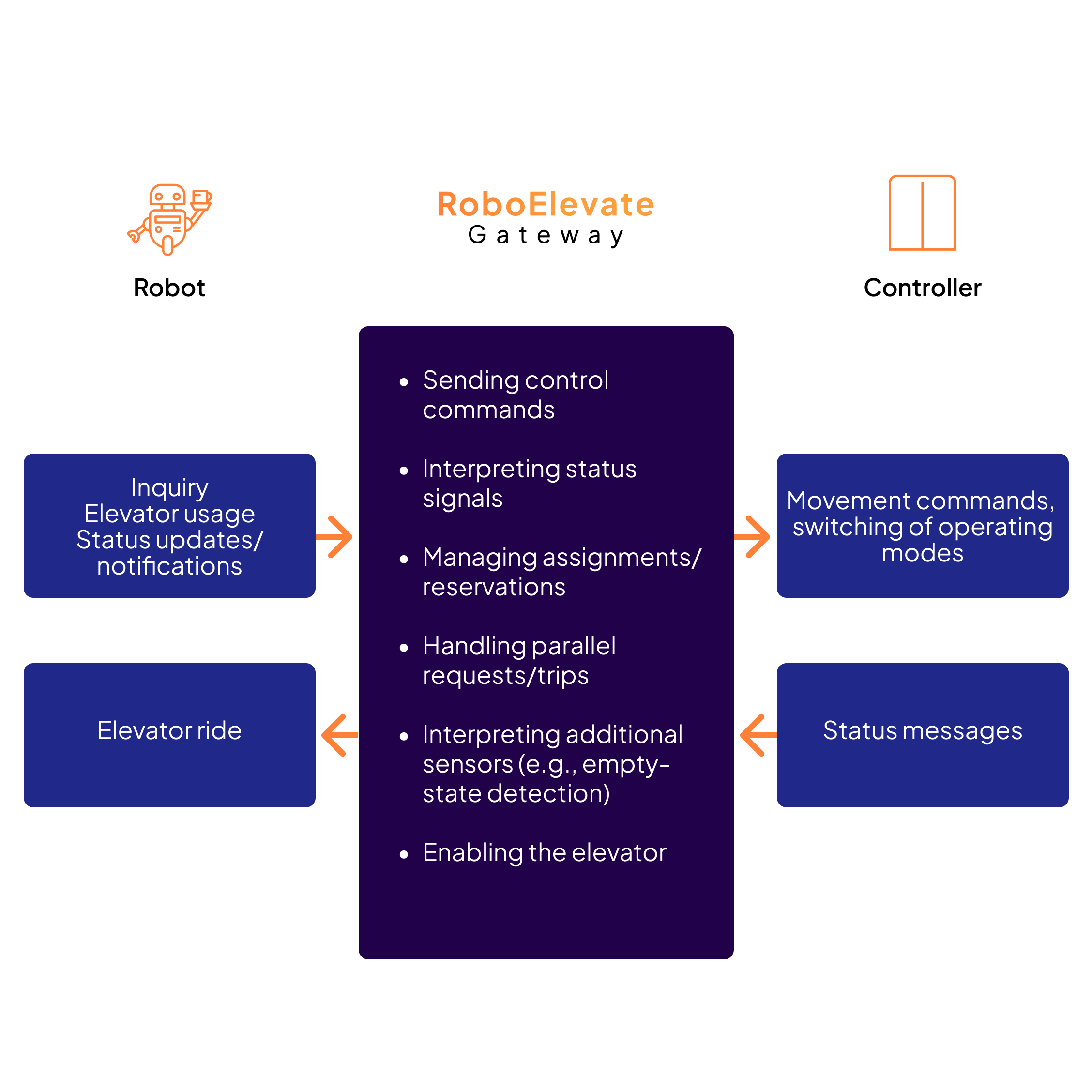
The eleon RoboElevate Gateway bridges this gap. Acting as the interface between elevators and robots, it enables seamless communication and autonomous service and logistics operations.
The Interface Between Robots and Elevators

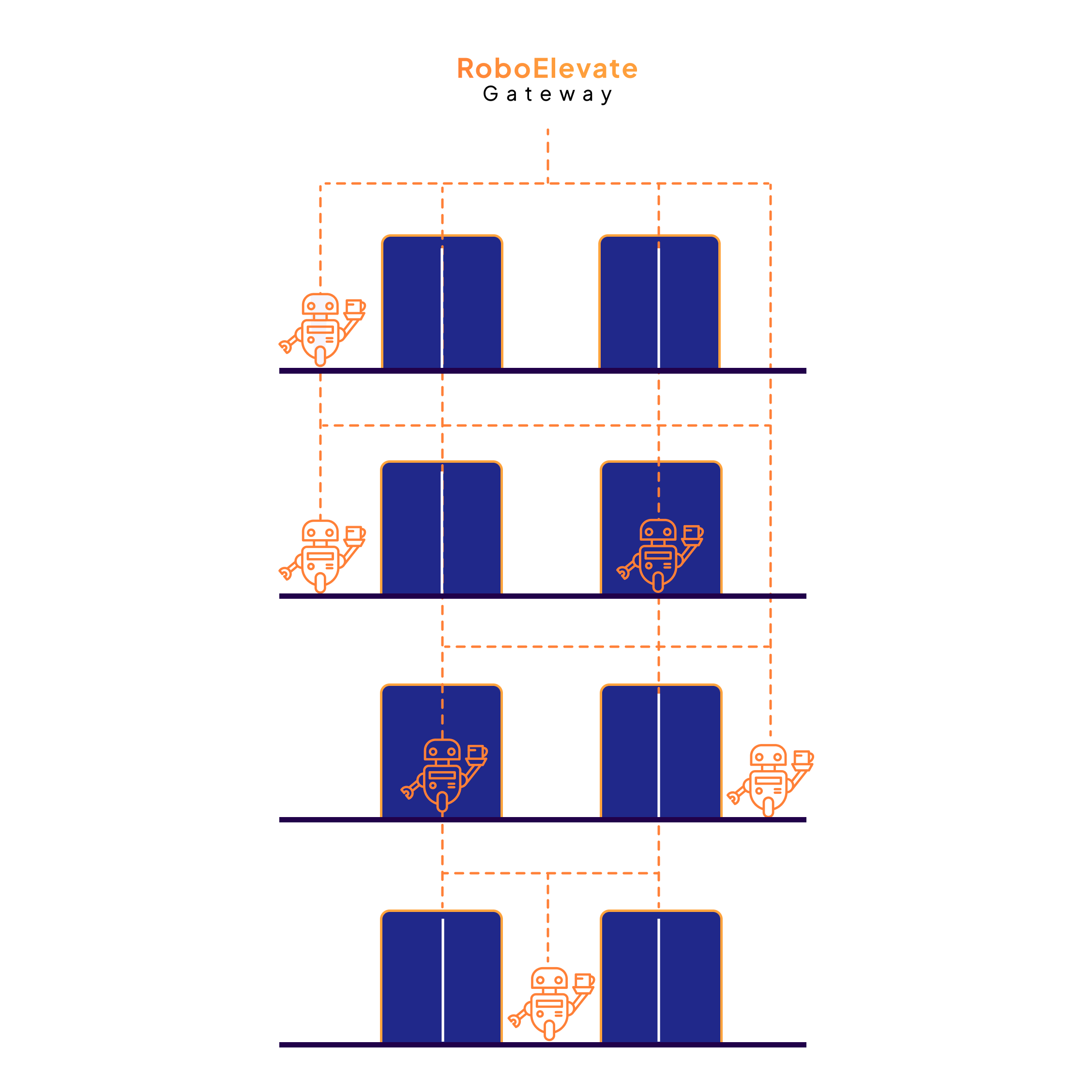
The eleon RoboElevate Gateway serves as the technical bridge between robotic systems and elevator control systems. It can be used for individual robots and elevators as well as for more complex applications involving multiple robots, different types of robots, or multiple elevators and elevator groups.

Depending on the project requirements, additional control functions, interfaces, and coordination, reservation, or prioritization logic can be implemented.

Compatible with Almost Any Elevator Control System and Robot

If the elevator control system already supports a robot mode or a suitable special operating mode, the RoboElevate Gateway primarily acts as a translator between the robot and the elevator controller.

If no such functionality is available, we can implement the required processes and control logic ourselves. Depending on the installation, integration can be achieved via CANopen Lift, I/O or relay contacts, or proprietary control protocols. This generally allows existing elevators to be integrated as well.

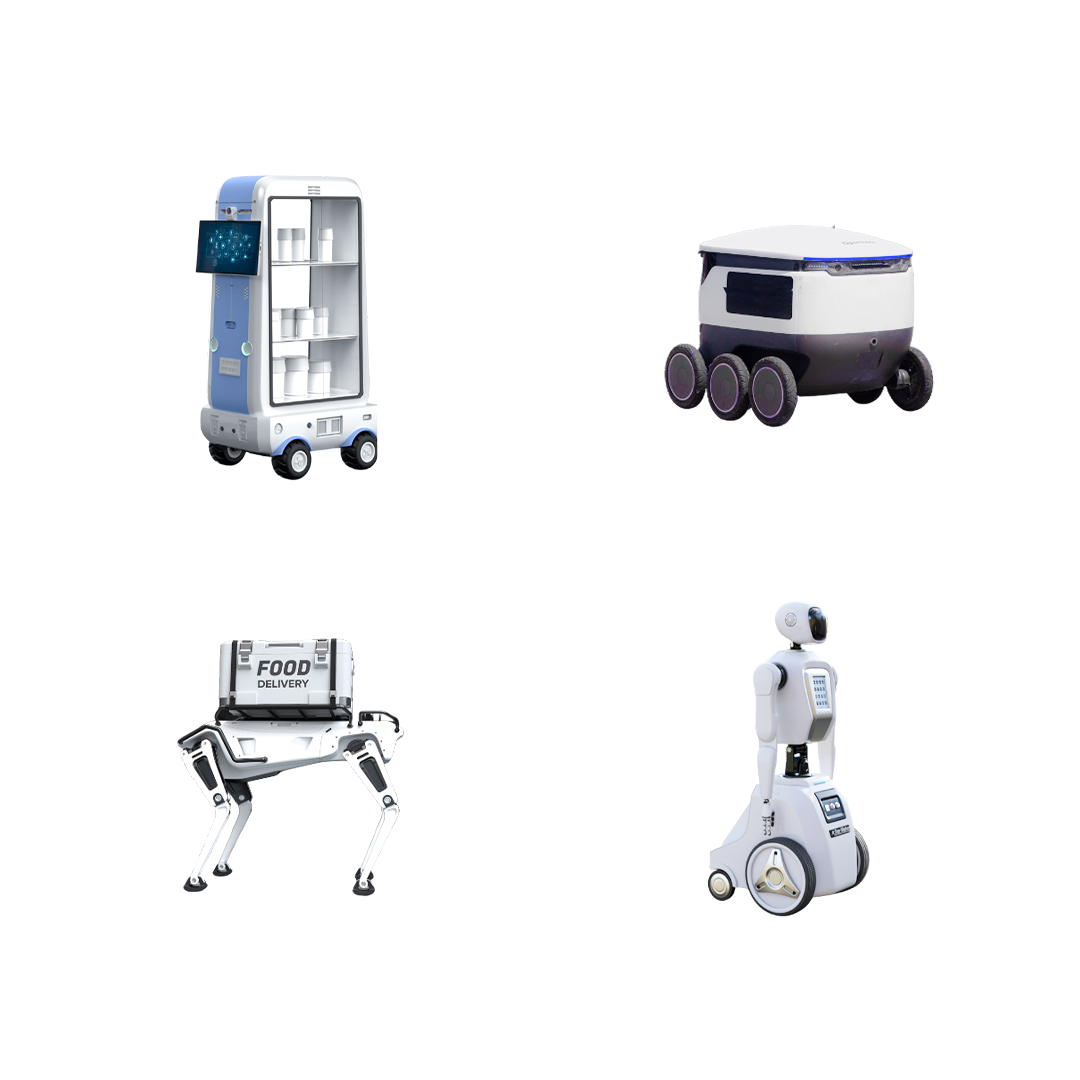
The RoboElevate Gateway is not limited to specific manufacturers or models on either the elevator or robot side. It can also be customized to meet the specific requirements of different robotic systems and elevator control systems.

This gives operators maximum flexibility when selecting their systems, without being tied to a particular combination of robot and elevator manufacturers.

How an Autonomous Robot Ride Works

The robot transmits its starting floor and destination floor. The elevator is then called and prepared for the robot ride. Once all requirements are met, the robot receives permission to enter the elevator.

The doors are then closed, and the elevator transports the robot to its destination floor. After the robot exits, the elevator car is released for normal operation.

The specific control logic is adapted to the capabilities of the existing elevator control system, the robotic system, and the building’s requirements.

Is the Elevator Car Really Empty?

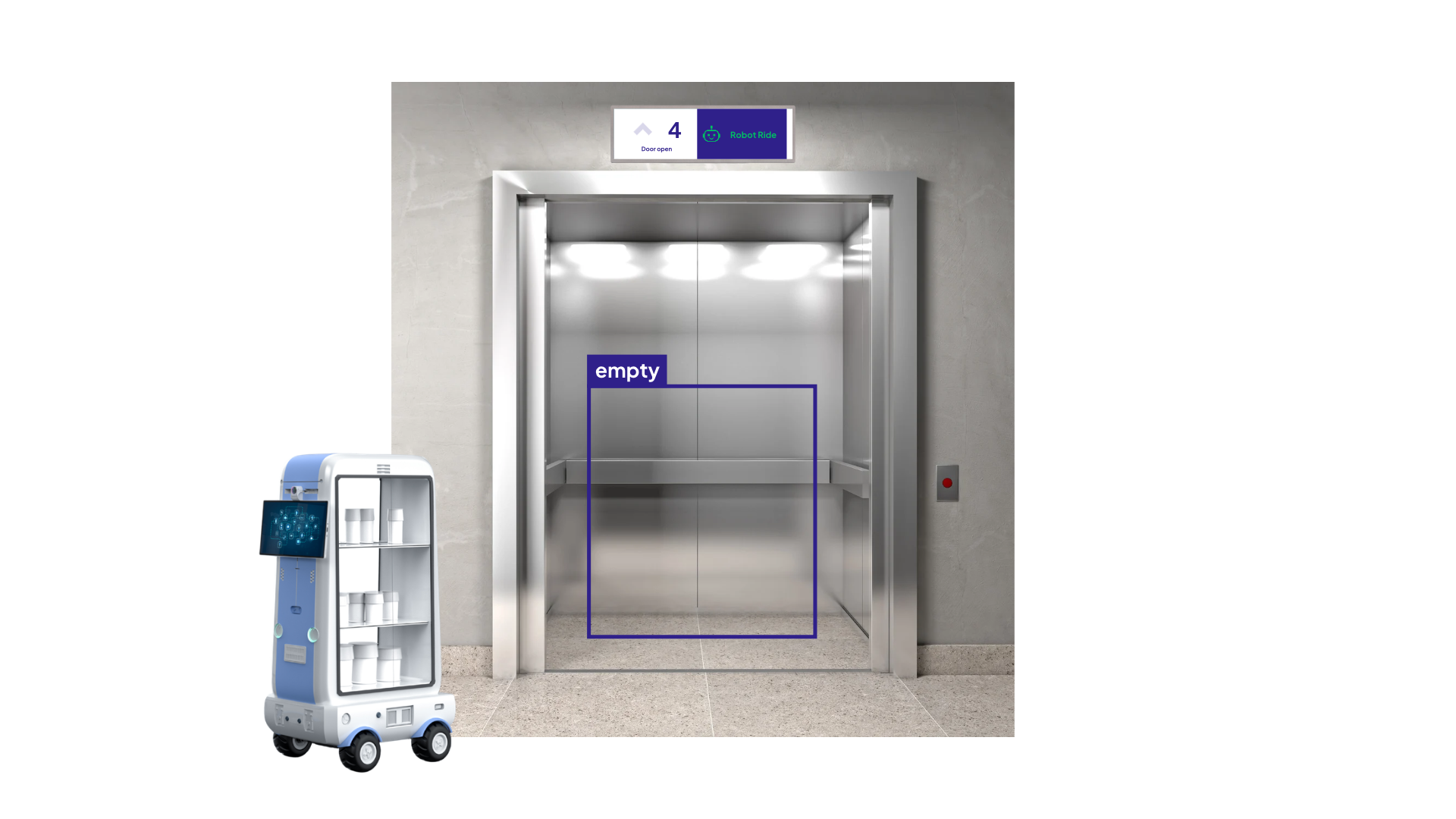
In some applications, robots and passengers should not or must not share the same elevator. However, the elevator control system cannot always reliably determine whether the elevator car is actually empty.

The ELFINVISION extension for the RoboElevate Gateway can visually detect whether people or other objects are present inside the elevator car. This information can be integrated directly into the control logic to determine whether the robot is permitted to enter the elevator.

Contact Us

ELFIN Technology GmbH

+49 221 6778932-0
 service@elfin.de

This contact form is deactivated because you refused to accept Google reCaptcha service which is necessary to validate any messages sent by the form.

Copyright © 2026 ELFIN Technology GmbH. All rights reserved.